Hva en væskepakkemaskin gjør og hvorfor den er viktig
En væskepakkemaskin automatiserer prosessen med å måle, fylle og forsegle flytende produkter i flasker, poser, kartonger eller andre beholdere med hastigheter og nøyaktighetsnivåer ingen manuell operasjon kan matche. Enten det er å tappe vann, fylle sjampoflasker, pakke matolje eller forsegle engangssausposer, utgjør disse maskinene ryggraden i produksjonslinjer på tvers av mat- og drikke-, farmasøytisk, kosmetikk- og kjemisk industri. Uten pålitelig væskeemballasjeutstyr ville bedrifter slite med å møte konsistente fyllevolum, opprettholde hygienestandarder og holde tritt med produksjonskravene til moderne detaljhandel og distribusjon.
Utover enkel hastighet, en god væskepakkemaskin leverer presisjon som beskytter både produsentens bunnlinje og forbrukerens tillit. Overfylling sløser med dyre produkter på tvers av tusenvis av enheter, mens underfylling risikerer brudd på regelverket og skader merkevarens omdømme. Moderne væskefyllingsmaskiner løser begge problemene gjennom presise volumetriske eller vektbaserte fyllesystemer som holder hver beholder konsistent, batch etter batch.
Hovedtyper av væskepakkemaskiner
Væskepakkemaskiner kommer i flere forskjellige konfigurasjoner, hver egnet for spesifikke produktviskositeter, beholdertyper og produksjonsvolumer.
Gravity fyllemaskiner
Tyngdekraftfyllere er avhengige av den naturlige nedadgående flyten av væske fra en oppbevaringstank til beholdere under, kontrollert av tidsstyrte ventiler. Denne enkle designen fungerer godt for tynne, frittflytende væsker som vann, juice eller melk, og har en tendens til å være rimeligere og enklere å vedlikeholde sammenlignet med mer komplekse fyllesystemer.
Stempelfyllingsmaskiner
Stempelfyllere bruker et mekanisk stempel for å trekke et nøyaktig volum væske inn i en sylinder, og skyv det deretter ut i beholderen. Denne designen håndterer tykkere, mer tyktflytende produkter eksepsjonelt godt, noe som gjør den til et populært valg for kremer, sauser, siruper og kremer der tyngdekraften alene ikke ville gi jevn flyt.
Pumpefyllingsmaskiner
Pumpefyllere bruker roterende lob-, gir- eller peristaltiske pumper for å flytte væske fra forsyningstanken direkte inn i beholdere. Disse systemene håndterer et bredt spekter av viskositeter og er spesielt nyttige for produkter som inneholder små partikler, siden visse pumpedesign er skånsomme nok til å unngå å skade delikate ingredienser suspendert i væsken.
Vakuumfyllingsmaskiner
Vakuumfyllere skaper undertrykk inne i beholderen for å trekke væske inn, noe som fungerer spesielt godt for tynne væsker i skjøre glassflasker der minimering av skum og sprut er viktig, for eksempel med vin eller visse farmasøytiske væsker.
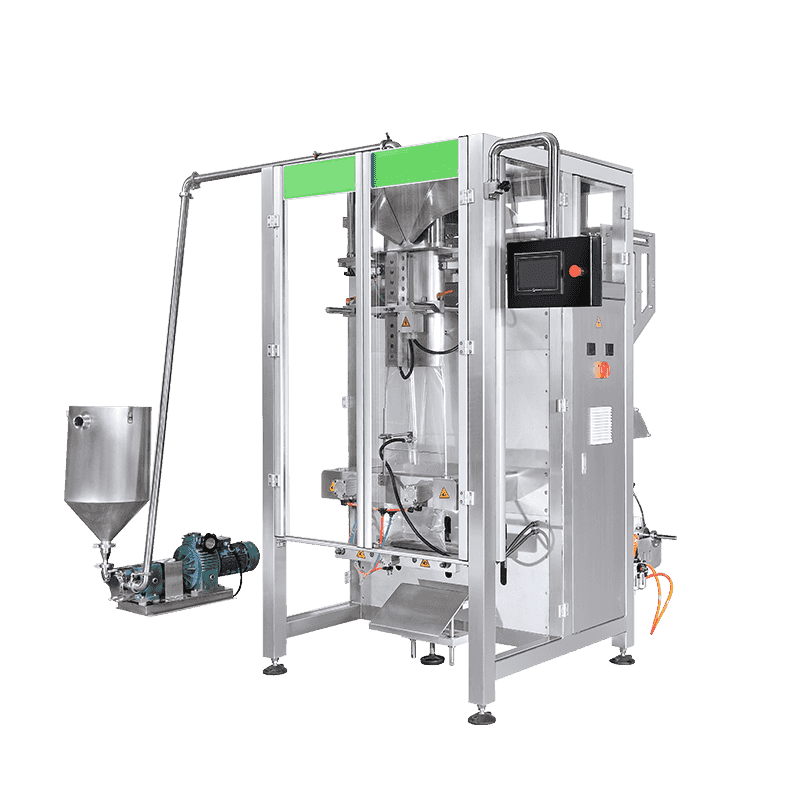
Sammenligning av fyllingsteknologier etter applikasjon
Å velge riktig væskepakkemaskin kommer i stor grad ned på å tilpasse fyllingsteknologien til produktets egenskaper. Tabellen nedenfor gir en rask referanse.
| Fyllingstype | Beste flytende viskositet | Vanlige produkter |
| Gravity fylling | Lite (tynne væsker) | Vann, juice, melk |
| Stempelfylling | Høy (tykke væsker) | Lotion, sauser, sirup |
| Pumpefylling | Middels til Høy | Vaskemiddel, suppe, dressing |
| Vakuumfylling | Lav til Middels | Vin, farmasøytiske væsker |
Å få denne matchen riktig forhindrer vanlig hodepine langs linjen, for eksempel inkonsekvente fyllnivåer, overdreven skumdannelse eller produktavfall fra å dryppe og sprute under påfyllingssyklusen.
Nøkkelfunksjoner å se etter i en væskepakkemaskin
Utover kjernefyllingsteknologien, skiller flere funksjoner en maskin som bare fungerer fra en som virkelig øker produksjonseffektiviteten og produktkvaliteten.
- Justerbare innstillinger for fyllevolum som passer til flere beholderstørrelser uten større verktøy
- Antidryppdyser som forhindrer produkttap og rotete beholderens ytre
- Konstruksjon i rustfritt stål for enkel rengjøring og samsvar med hygienestandarder for matvare
- Programmerbare logiske kontrollere som tillater raske reseptendringer mellom produktkjøringer
- Integrerte deksel-, merkings- eller forseglingsmoduler for en mer komplett pakkelinje
- Fyll nøyaktighetsovervåkingssystemer som flagger containere som ikke er spesifisert automatisk
For bedrifter som kjører flere produktlinjer eller ofte endrer beholderstørrelser, kan investering i en maskin med hurtigskiftefunksjoner redusere nedetiden mellom produksjonspartier dramatisk, noe som ofte betyr mer for den totale gjennomstrømningen enn råfyllingshastigheten alene.
Automatiske versus halvautomatiske væskepakkemaskiner
Å velge mellom automatisk og halvautomatisk utstyr avhenger sterkt av produksjonsvolum, budsjett og tilgjengelig gulvplass.
Halvautomatiske maskiner
Halvautomatiske væskepakkemaskiner krever at en operatør manuelt plasserer og fjerner beholdere, mens maskinen håndterer selve fylleprosessen. Disse maskinene passer for mindre virksomheter, oppstarter eller virksomheter som produserer lavere volum der investeringen i en helautomatisk linje ennå ikke er berettiget.
Helautomatiske maskiner
Helautomatiske systemer integrerer beholdermating, fylling, lokk og ofte merking i én sammenhengende linje med minimal menneskelig innblanding. Disse maskinene er bygget for høyvolumsprodusenter som trenger konsistent produksjon døgnet rundt, og mens forhåndsinvesteringen er betydelig høyere, rettferdiggjør arbeidsbesparelsene og produksjonshastigheten typisk kostnadene for virksomheter som opererer i stor skala.
Vedlikeholdstips for å holde maskinen i gang jevnt
Regelmessig vedlikehold holder en væskepakkemaskin i drift med maksimal nøyaktighet og forhindrer kostbar uplanlagt nedetid under produksjonskjøringer.
- Rengjør påfyllingsdyser og produktkontaktdeler daglig, spesielt når du bytter mellom produktformler
- Inspiser tetninger og pakninger regelmessig for slitasje som kan føre til lekkasjer eller forurensning
- Kalibrer fyllevolumsensorer med jevne mellomrom for å opprettholde konsistente, nøyaktige fyllinger
- Smør bevegelige mekaniske deler i henhold til produsentens anbefalte tidsplan
- Ha reservedeler for slitasjeartikler som dyser og ventiler tilgjengelig for å minimere nedetiden
Velge riktig leverandør for din væskepakkemaskin
Å velge en anerkjent utstyrsprodusent betyr like mye som å velge riktig fyllingsteknologi. Se etter leverandører med dokumentert erfaring i din spesifikke produktkategori, enten det er matgodkjente drikkevarer, tyktflytende kosmetikk eller industrielle kjemikalier, siden spesialisert kunnskap ofte oversettes til bedre designet utstyr for dine unike utfordringer. Å be om referanser, gjennomgå casestudier og spørre om ettersalgsstøtte og tilgjengelighet av reservedeler kan bidra til å sikre at du samarbeider med en produsent som vil støtte produksjonslinjen langt utover den første installasjonen.
Siste tanker om investering i væskeemballasjeutstyr
En velvalgt væskepakkemaskin kan transformere produksjonseffektivitet, redusere produktavfall og sikre konsistent kvalitet som får kundene til å komme tilbake. Ved å forstå de forskjellige fyllingsteknologiene som er tilgjengelige, tilpasse maskinkapasiteten til produktets viskositet og beholderkrav, og forplikte seg til regelmessig vedlikehold, kan produsenter maksimere oppetiden og få mest mulig ut av utstyrsinvesteringen i årene som kommer. Å ta seg tid på forhånd til å velge riktig maskin og leverandør gir utbytte i jevnere operasjoner og færre produksjonshodepine på veien.




Kontakt oss